Enthusiasts Of British Motor Vehicles
  • Home
  • News
  • Events
  • Blogs
  • Photo Galleries
    • 2026 >
      • 2026 Gloucester Vintage & Country Extravaganza Photo Gallery
      • 2026 Wye Valley Tour ​Photo Gallery
      • 2026 Return to the Cotswolds Tour ​Photo Gallery
      • 2026 Discover Dorset Tour ​Photo Gallery
      • 2026 NEC Resto Show ​Photo Gallery
    • 2025 >
      • 2025 Kings Bromley Treasured Vehicle Show Photo Gallery
      • 2025 Gloucester Vintage & Country Extravaganza Photo Gallery
      • 2025 Superb Snowdonia Tour ​Photo Gallery
      • 2025 Pride of Longbridge Show ​Photo Gallery
      • 2025 NEC Resto Show ​Photo Gallery
      • 2025 Yorkshire Moors & Coastal Towns Tour ​Photo Gallery
    • 2024 >
      • 2024 BL Autumn Rally ​Photo Gallery
      • 2024 Fabulous Fourth Peak District Tour Gallery Gallery
      • 2024 Glos Vintage & Country Extravaganza Gallery
      • 2024 North Devon Tour Photo Gallery
      • 2024 NEC Restoration Show Photo Gallery
      • 2024 Norfolk Tour Photo Gallery
      • 2024 Coal in the Valleys Photo Gallery
    • 2023 >
      • 2023 NEC Classic Motor Show Photo Gallery
      • 2023 Fat Lamb 3 Tour Photo Gallery
      • 2023 Warwickshire Tour Photo Gallery
      • 2023 Lucas isn't bored Photo Gallery
      • 2023 Gar's birthday tour of Devon Photo Gallery
      • 2023 Shropshire Tour Photo Gallery
      • 2023 Anglesey & Snowdonia Tour Photo Gallery
    • 2022 >
      • 2022 Classic Motor Show Gallery
      • 2022 Fat Lamb Tour Gallery
      • 2022 NC500 - the Grand Tour of the Scottish Coast Photo Gallery
      • 2022 Glos Vintage & Country Extravaganza Gallery
      • 2022 Best of Yorkshire Tour Gallery
      • 2022 Peak District Revisited Tour Gallery
      • 2022 Gaydon Weekend Gallery
      • 2022 NEC Resto Show Gallery
      • 2022 Forest of Dean Winter Tour Gallery
    • 2021 >
      • 2021 Classic Motor Show Gallery
      • 2021 Fat Lamb Tour Gallery
      • 2021 Welsh Tour Gallery
      • 2021 Jurassic Coast Tour Gallery
      • 2021 Crich Museum & Tour Gallery
      • 2021 Staffs Oatcake Tour Gallery
      • 2021 Boston CCC Show Photo Gallery
    • 2019 >
      • Yorkshire Moors Driving Tour 2019
      • Lancaster Insurance Classic Motor Show NEC Nov 2019
      • New Forest Driving Tour 2019
      • Gloucester Vintage & Steam Extravaganza Photo Gallery 2019
      • Tour of the Dark Peak Photo Gallery 2019
      • Codgers do the Cotswolds 2019
      • Bubble Car Museum Gallery 2019
      • Brecon Beacons driving tour 2019
      • Morgan Factory tour 2019
      • Practical Classics Classic Car & Restoration Show 2019
    • 2018 >
      • Lancaster Insurance Classic Motor Show NEC November 2018
      • Isle of Wight Tour 2018
      • Brunel's Somerset Tour Gallery 2018
      • Gloucester Vintage Extravaganza 2018
      • Maesteg Charity Classic Car Show & Driving Tour 2018
      • Bubble Car Museum & Driving Tour 2018
      • Peak District Driving Tour 2018
      • Practical Classics Classic Car & Restoration Show 2018
      • Coventry Transport Museum 2018 >
        • Joel Lodder's 2018 Coventry meet gallery
    • 2017 >
      • Lancaster Insurance Classic Motor Show NEC November 2017
      • Snowdonia Driving Tour 2017
      • Gloucester Vintage Extravaganza 2017
      • Lupin Farm Charity Car Show 2017
      • The Shackleton Trust 2017
      • Crich Tramway Museum 2017
      • Bubble Car Museum 2017
      • Pride of Longbridge 2017
      • April 2017 Practical Classics Restoration Show (NEC)
    • 2016 >
      • Crich Tramway Museum 2016
    • 2015 >
      • Bubble Car Museum 2015
      • Coventry Transport Museum 2015
  • YouTube
  • Insurance
  • Shop
  • Mailing List
  • Contact
  • Join
  • About

blogs

Categories

All
Alan Warwick
Andy Perman
Anthony Osborne
Austin Mini
Brett Richardson
Brian Allison
Brits Abroad
Callum Tooey
Classic Motor Show
Daniel Bysouth
Drive It Day
Eddy Glass
Eric Dalton
Focus On British Classics
Gar Cole
Graeme Moore
Graham Hemsley
Group Events
Group Tours
Gus Brooks
Holly Bush
In The Workshop
Jim Lodder
Joel Lodder
John Lonergan
John O'Cean
John Simpson
Kevin Thompson
Mark Smith
Matthew Homburg
Members Classics
Members Recollections
Mick Masters
Mike Peake
NEC Resto Show
Nicholas Webb
Nick Arthur
Nigel Hughes (Vauxhall Cavalier & Chevette Club PR)
Paul Sweeney
Projects
Steve Favill
The Weekly Groan
Tony "Tosh" Brooks
Unsung Heroes
VLOG
YouTube

Archives

July 2026
June 2026
May 2026
April 2026
March 2026
February 2026
December 2025
September 2025
August 2025
July 2025
June 2025
May 2025
April 2025
March 2025
February 2025
January 2025
December 2024
November 2024
October 2024
September 2024
August 2024
July 2024
June 2024
May 2024
April 2024
March 2024
November 2023
October 2023
September 2023
August 2023
July 2023
June 2023
May 2023
April 2023
March 2023
January 2023
December 2022
November 2022
October 2022
September 2022
August 2022
July 2022
June 2022
May 2022
April 2022
March 2022
February 2022
January 2022
December 2021
November 2021
October 2021
August 2021
July 2021
June 2021
May 2021
April 2021
February 2021
December 2020
October 2020
September 2020
August 2020
July 2020
June 2020
May 2020
April 2020
November 2019
October 2019
September 2019
August 2019
July 2019
June 2019
May 2019
April 2019
March 2019
February 2019
December 2018
November 2018
October 2018
September 2018
August 2018
July 2018
June 2018
May 2018
April 2018
March 2018
February 2018
January 2018
December 2017
November 2017
October 2017
September 2017
August 2017
July 2017
June 2017
May 2017
April 2017
March 2017
February 2017
January 2017
December 2016
November 2016
September 2016
August 2016
June 2016
May 2016
April 2016
March 2016
February 2016
January 2016
December 2015

The Clarkson Effect - Chapter 1

24/6/2026

2 Comments

 
Love him or loathe him, no single person has done more to put motoring into British living rooms over the last 40 years.
Picture

Chapter 1 - From Paddington Bears to Top Gear

​Mention Jeremy Clarkson in any room full of British car enthusiasts and you'll probably get three reactions.
  • Someone will declare him a genius.
  • Someone else will call him an idiot.
  • And a third person will insist he was much better before he became famous.
The truth, as usual, lies somewhere in the middle. Love him or loathe him, Jeremy Clarkson has probably done more than any other individual to shape modern British motoring culture.

Millions who had never changed a spark plug, adjusted SU carburettors or even opened a bonnet suddenly found themselves debating horsepower, lap times and the merits of a Jaguar versus a BMW because Clarkson made cars entertaining.
  • Not necessarily sensible.
  • Not always accurate.

But undeniably entertaining.
​
And that journey started in a rather unlikely way.


​Before the Cars
Jeremy Clarkson was born in Yorkshire in April 1960 and began his working life far away from television. His parents famously built a business around selling Paddington Bear toys before Clarkson moved into journalism and local newspapers. (Wikipedia)
Like many great motoring writers, he didn't start by testing Ferraris. He started by writing whatever he could get paid for. Local newspapers led to motoring journalism, and motoring journalism led to something that would change British television forever.


The Accidental Television Star
In 1988 Clarkson joined the original format of Top Gear.
At the time, Top Gear was informative, worthy and about as exciting as a motorway service station sandwich.
Then Clarkson arrived.

According to former producer Jon Bentley, Clarkson stood out because he was opinionated, irreverent and, crucially, funny. Bentley later recalled that Clarkson could make cars entertaining rather than simply informative. (Wikipedia)
That was the breakthrough.

Clarkson understood something many television executives had missed; people don't really care about cars, they care about stories.
  • A road test became a comedy sketch.
  • A performance figure became an argument.
  • A family hatchback became an opportunity for ridicule.
The formula sounds obvious now, but at the time it was revolutionary.
​
Why Enthusiasts Connected
Classic car owners often accuse Clarkson of being too theatrical. They're right, but that was precisely his gift. Most motoring journalists described cars; Clarkson described how cars made people feel.
  • When he loved a Jaguar, viewers felt it.
  • When he hated a Vauxhall, viewers knew it.
  • His reviews weren't engineering reports, they were entertainment.
And because they were entertaining, millions watched.

For many enthusiasts of a certain age, Clarkson became the gateway drug to a lifetime of automotive obsession.
A teenager who tuned in for the jokes often stayed for the cars.

The British Car Factor
One reason Clarkson connected so strongly with British audiences was his affection for British motoring traditions. He could be brutally critical of British manufacturers when they deserved it, but he also understood something many commentators missed.
Cars are more than transport; they're part of our national story.

Whether discussing a Jaguar E-Type, a Range Rover or a humble Mini, Clarkson often presented cars as cultural icons rather than machines. That resonated strongly with enthusiasts. Especially those of us who know that owning an old British vehicle is rarely the logical choice.
It's an emotional one.
Controversial? Absolutely
No honest article about Clarkson can ignore controversy.
Throughout his career he has generated criticism from politicians, pressure groups, broadcasters and newspaper columnists. His outspoken style became almost as famous as the cars themselves. (Wikipedia)
Yet controversy often seemed to fuel his popularity.

Many viewers felt Clarkson was saying what ordinary enthusiasts were thinking. Others felt he crossed the line.
Either way, people kept watching and Top Gear kept growing.

A Quote That Explains Everything
Perhaps the best description of Clarkson came not from Clarkson himself but from producer Jon Bentley, who said he was "looking for someone who could make cars on television fun". (Wikipedia)
That's really the key.
  • Not accurate.
  • Not educational.
  • Not responsible

...but definitely fun. 

​Clarkson recognised that enthusiasm is infectious. And before long, Britain was infected. By the late 1990s, the loud Yorkshireman with the floppy hair was no longer just a motoring journalist.
He was becoming a national institution.
​
In Part 2 we'll look at the period many enthusiasts still regard as the golden age: the relaunch of Top Gear, the arrival of Richard Hammond and James May, and how three middle-aged men managed to turn a motoring program into a global phenomenon.
2 Comments

The BMC ADO16: Britain’s Brilliant “Big Mini”

20/5/2026

0 Comments

 
Picture
Development, Design, and Badge-Engineered Legacy
For British classic car enthusiasts, few models capture the optimism and engineering ingenuity of the 1960s quite like BMC’s ADO16 range—the Austin, Morris, MG, Riley, Wolseley, and Vanden Plas 1100/1300 family.

​Launched in 1962, it became Britain’s best-selling car for much of the decade (and into the 1970s), with over 2 million produced. It offered advanced front-wheel-drive packaging, class-leading space, and a revolutionary suspension system in a stylish Pininfarina suit. Often called the “big Mini,” it was more refined and practical, embodying Issigonis’s philosophy of maximizing interior space while minimizing mechanical bulk.
Development: From Mini Lessons to a Family Car
Following the 1959 Mini (ADO15), BMC needed a larger car to bridge the gap between the Morris Minor/Austin A40 and the larger Farina saloons. Codenamed XC9002 (later ADO16 for Austin Drawing Office project 16), development began around 1958–1959 under Sir Alec Issigonis.
​
Issigonis envisioned a scaled-up Mini with transverse engine, front-wheel drive, and enhanced refinement. Early prototypes (XC9002) closely resembled a stretched Mini but lacked character. Leonard Lord commissioned Pininfarina for styling, which transformed the design dramatically in 1959 with crisp lines, a balanced profile, and appealing proportions. Detailed engineering moved to Cowley under Charles Griffin (Morris Chief Engineer), with input from a strong team including Reg Job. Issigonis maintained oversight, visiting weekly.
Key innovations addressed Mini shortcomings:
  • Enlarged A-Series engine (from 948cc prototype to 1098cc production, later 1275cc).
  • Alex Moulton’s Hydrolastic interconnected fluid suspension (debuting on ADO16 after refinement; rubber cones plus fluid displacers linked front-to-rear for excellent ride and reduced pitch).
  • Disc front brakes (controversial at the time; Issigonis reportedly saw them as “fashionable” but management pushed for them).
Alec Issigonis on the ADO16 (Motor magazine, 1962}
The bigger scale of everything makes problems easier, and there were not such fanatical requirements of space saving as in the little car... This one took us longer than the ADO15 to develop. It wasn’t so urgently needed from a commercial point of view and we were faced with problems of getting much greater refinement.
Picture
1962: an early production Morris sold in New Zealand
Charles Griffin played a crucial role in refinement. The car used a transversely mounted A-Series with gearbox in the sump, delivering impressive interior space rivaling larger rivals like the Ford Cortina.
​
​Production started at Cowley (Morris first), with Longbridge for Austin variants. Launch delays and badge engineering reflected internal BMC politics between Austin and Nuffield dealer networks.
Design Highlights: Packaging Genius Meets Italian Flair
The ADO16 excelled in space efficiency. Despite compact external dimensions (wheelbase ~93.5 in / 2375 mm, length ~146.65 in / 3725 mm), it offered a spacious cabin and decent boot. The Hydrolastic suspension provided a supple, pitch-resistant ride that contemporaries raved about—superior to conventional setups.
Pininfarina’s styling gave it a modern, upscale look with clean lines, cropped rear fins (early influence), and distinctive grilles per badge. Interiors varied from basic to luxurious (wood and leather in Vanden Plas). Two- and four-door saloons, plus estates (Countryman/Traveller from 1966), were offered. Mark II (1967) brought a wider grille and all-synchromesh gearbox; Mark III (1971) minor updates.
Contemporary praise: Motoring press lauded the ride, handling, and space. It felt modern and comfortable, a step above rivals. One review noted its ability to make rough roads feel smooth while remaining stable at speed.
The photos below show a 2-door MG 1300 MKII in New Zealand where they are especially unusual now because relatively few were imported compared with Austins and Morrises, and many local survivors succumbed to rust or were dismantled decades ago. A genuine NZ-assembled or original-import car in solid condition such as this one is something most British car enthusiasts would stop and look at closely.
History and Market Impact
The Morris 1100 launched on 15 August 1962, with Austin following in 1963. It quickly topped UK sales charts, holding strong market share (~15% at peak) thanks to its blend of innovation and practicality. Production hit over 2 million by the mid-1970s.
Challenges included early reliability niggles (shared with Mini), rust (notoriously poor body protection), and BMC’s slow updates. The 1300 arrived belatedly in 1967. By the early 1970s, it faced stiff competition from the Ford Cortina and Escort. Production ended in 1974 (UK), replaced piecemeal by the Allegro and Marina. Its legacy endures among enthusiasts for packaging brilliance, though survivors are rarer due to corrosion.
Picture
All Badge Variants
BMC’s badge engineering reached its zenith with ADO16. Core mechanicals were shared, with trim, grilles, badging, and minor power differences distinguishing them.​​
  • Austin 1100/1300 (incl. 1300GT): Longbridge-built. Wavy-bar grille; GT had twin carbs, vinyl roof, sportier trim (from 1969).
  • MG 1100/1300: Sportier twin-carb versions. Octagonal badges, unique grille, higher tune.
  • Riley Kestrel (1100/1275/1300): More luxurious Riley badging; dropped in 1969.
  • Wolseley 1100/1300: Upmarket with Wolseley grille and illuminated badge.
  • Vanden Plas Princess 1100/1300: Luxury flagship with wood, leather, and Vanden Plas refinement.
  • Morris 1100/1300: Initial launch model (Cowley-built). Basic to mid-range, straight-bar grille.
Estates: Austin Countryman / Morris Traveller.
​Overseas: Austin America (US, two-door), various local names (e.g., Apache in some markets), Innocenti in Italy.
Photos show a Vanden Plas Princess MKII distinguished by its leather and wood trim and a large chrome grille.
Detailed Specifications
Picture
Picture
Why It Matters Today
The ADO16 remains a high-water mark for BMC innovation: Issigonis packaging, Moulton suspension, and Pininfarina style in one affordable package. Quotes from the era capture the excitement, while its sales success proved the formula. For enthusiasts, restoring one highlights the clever engineering—and the rust battles. It’s a quintessential British classic that shaped 1960s motoring.

What’s your favourite ADO16 variant? Share in the comments—perhaps a pristine Vanden Plas or a peppy MG 1300? 
Sources: Wikipedia, Classiccandsportscar, Classicsworld, YouTube, Aronline, Facebook
0 Comments

RISING FUEL PRICES - Pumped Up & Put Out?

16/4/2026

0 Comments

 
Rising fuel prices are sending shivers through Britain's classic car community — but the nation's most devoted oily-fingered optimists refuse to be beaten.
Picture
Picture
A fifteen-mile blast along a favourite B-road still costs less than a therapist, and works considerably better."
Picture
"The engine runs on optimism and old invoices. The petrol is, admittedly, more expensive."
There is a particular kind of stoic madness that grips a certain breed of Briton every weekend morning. You can spot them in driveways across the land: flat cap on, tea going cold on the workbench, knuckles bruised from a recalcitrant SU carburettor. These are the classic car enthusiasts, and right now, they are doing what they do best — grimly soldiering on in the face of adversity. The adversity, on this occasion, being the alarming cost of the juice that makes their beloved machines go.
​
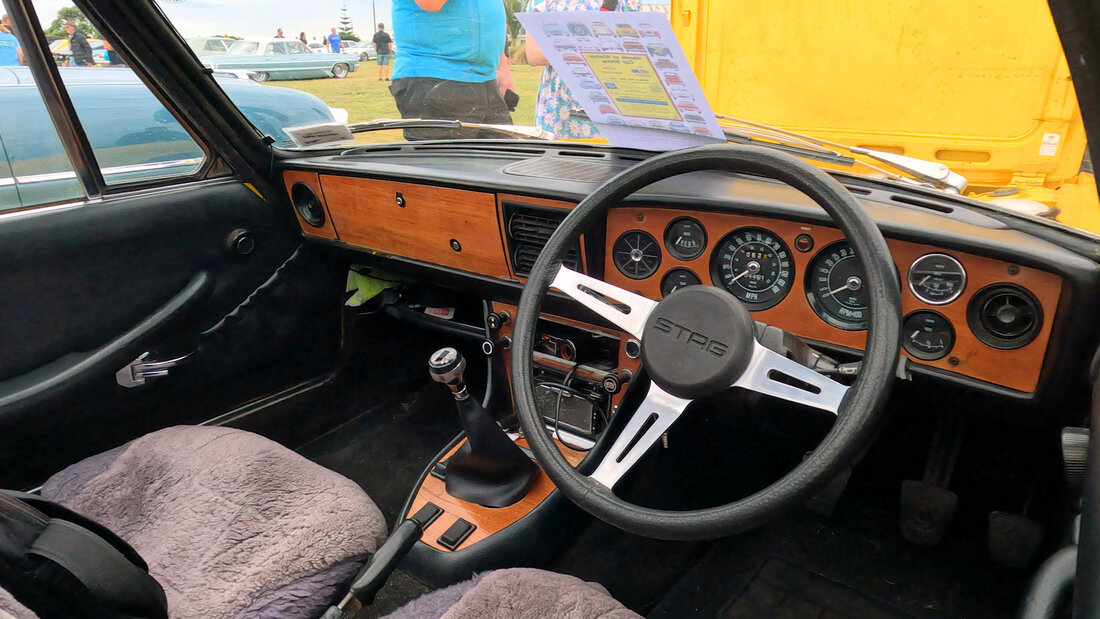
Fuel prices have been creeping upward with the cheerful persistence of a bad penny, and for those whose weekend companions drink petrol like a distressed Victorian novelist drinks laudanum, this is rather more than a minor inconvenience. When your 1972 Triumph Stag returns something in the region of 18 miles to the gallon — on a good day, downhill, with a following wind — a trip to the shops and back starts to feel like a minor financial commitment.
The Great British Recalculation
​Up and down the country, owners of Morrises, Jaguars, MGBs, and Cortinas are quietly doing the mental arithmetic. The Sunday run to the local car meet — previously an act of pure uncomplicated joy — now comes with a small but nagging spreadsheet in the back of the mind. "It's not that I won't go," confided one E-Type owner we spoke to, gazing thoughtfully at his fuel gauge. "It's just that I now wave goodbye to the family with slightly more gravity than before."
​
The Austin-Healey crowd are particularly philosophical about it. These are, after all, people who willingly chose a car that requires the driver to remove the dashboard to access the heater controls. A bit of expensive petrol is hardly going to break their spirit. If anything, suffering is part of the appeal.
Picture
Creative Coping Strategies
The British classic car enthusiast is nothing if not adaptable. Already, ingenious solutions are emerging from garages across the nation. Some are simply doing shorter runs — a brisk fifteen-mile blast along a favourite B-road rather than an ambitious cross-country jaunt. Others are joining forces, organising convoy runs so that the petrol anxiety is at least shared among friends and therefore 30% more bearable through the power of community and biscuits at the halfway stop.

A small but committed faction is exploring ethanol blends and modern fuels compatible with older engines, engaging in the kind of earnest online forum research that would not look out of place at a small university. The threads are lengthy, technical, and deeply sincere. One post, running to forty-seven replies, debated the precise merits of E5 versus E10 petrol for a 1968 Hillman Imp with the seriousness of a parliamentary committee.
​
And then there are those who have discovered, with some relief, that the best classic cars were always the light ones. The owner of a 1963 Mini Cooper has been rather insufferably smug about the whole affair. "Fifty miles to the gallon," he mentioned, for the fourth time in a single afternoon. He was not wrong, but he was not making friends.
The Shows Must Go On
The summer show season — that glorious procession of village green gatherings, castle forecourt concours events, and airfield extravaganzas — remains defiantly intact. Organisers report no significant drop in entries, which says everything you need to know about the commitment levels of people who spent the previous autumn reupholstering their own seats and fabricating a correct-spec exhaust bracket from raw steel. You do not do those things and then decide the car is too expensive to drive to a show.
​
If anything, there is a renewed appreciation for the event itself — for the camaraderie, the gentle showing-off, the shared agony of comparison with someone whose restoration is inexplicably more perfect than yours despite them insisting they "just touched it up a bit." The drive to the show has always been the point, not merely the means. It is simply that the point now costs a little more per litre.
A Silver Lining (Optional, Like Most Options on British Cars)
Here is the cheerful truth that sits beneath all the grumbling: nobody who owns a classic car does so because it is cheap. They never did. Ownership has always involved a certain philosophical generosity toward unexpected expenditure, a willingness to shrug at bills that would make a sensible person weep, and a fundamental belief that these things are worth it because joy, once properly calibrated, is priceless.
Fuel prices going up is, in the grand tapestry of classic car ownership, somewhere between "annoying" and "just another thing." It sits comfortably alongside rubber seals that perish, chrome that pits, and the eternal mystery of where that rattle is coming from. Britain's classic car enthusiasts have survived worse.

​They will adjust the mixture, check the tyre pressures, pour themselves a flask of tea, and head out anyway — because some things, even now, are simply too good not to do. The roads are still there. The engines still fire. And honestly, at 18 miles to the gallon, every single one of those miles still counts.
0 Comments

Hydrolastic Suspension: Britain’s Most Ambitious Attempt to Redefine the Car Ride

12/4/2026

0 Comments


The invention, development, deployment, and retirement of BMC’s Hydrolastic suspension system

Few automotive technologies better capture the ingenuity — and occasional overreach — of post-war British engineering than Hydrolastic suspension. Developed under the British Motor Corporation (BMC) in the early 1960s, it aimed to solve a problem that had long frustrated small-car designers: how to give compact, lightweight vehicles the smoothness of a luxury saloon without sacrificing space or cost.

What emerged was one of the most innovative — and controversial — suspension systems ever fitted to mass-production cars.
​      BODY / SUBFRAME
           │
           │  rubber spring element
           ▼
   ┌───────────────────┐
   │   RUBBER CONE     │  ← acts as the spring
   │                   │
   │   hydraulic fluid │  ← transmits load
   │                   │
   │   damping valve   │  ← controls rebound
   └───────┬───────────┘
           │
        SUSPENSION ARM
           │
          WHEEL
Picture
🧠 The Idea: Why Hydrolastic was Invented

The origins of Hydrolastic lie in a convergence of two engineering minds:
  • Sir Alec Issigonis, designer of the Mini and the ADO16
  • Dr. Alex Moulton, rubber suspension specialist and innovator

At the time, small cars like the original Mini suffered from a major flaw: pitching — the nose-diving, tail-lifting motion caused by a short wheelbase and stiff suspension. The inspiration partly came from the hydropneumatic systems being developed by Citroën in France, especially the futuristic Citroën DS, which showed that fluid-based suspension could dramatically improve ride comfort.
But Moulton’s goal was different:
Instead of a complex hydraulic system with pumps and pressure regulation, he wanted something:
  • simple
  • cheap to manufacture
  • self-contained
  • suitable for mass production

⚙️ The Breakthrough Design

Introduced in 1962 and first used on the ADO16 Morris 1100, Hydrolastic replaced conventional springs and dampers with displacer units at each wheel.
Each unit contained:
  • a rubber spring element
  • hydraulic fluid
  • damping valves

The key innovation was interconnection:
👉 Front and rear wheels on the same side of the car were linked by a fluid pipe.
So when: the front wheel hit a bump → fluid was displaced backward → rear wheel was lifted slightly.
This created a remarkable effect:
  • reduced pitching
  • improved ride smoothness
  • natural anti-dive and anti-squat characteristics
Unlike conventional suspension, Hydrolastic also introduced a progressive spring rate, meaning the system stiffened as it compressed.

🚗 Development and Expansion (1960s–1970s)
Following success on the ADO16 (Morris 1100 / Austin 1100 / MG 1100), Hydrolastic quickly expanded across BMC’s lineup.
Key cars using Hydrolastic:
  • Mini (from 1964 onwards in some variants)
  • Morris 1100 / Austin 1100 (ADO16)
  • Austin 1800 “Landcrab”
  • Austin Maxi
  • Various Australian and export-market models
By the mid-1960s, Hydrolastic had become a defining feature of BMC engineering philosophy.

🌍 Real-World Impact and Reception
When it worked properly, Hydrolastic was widely praised:
Advantages:
  • Exceptional ride comfort for small cars
  • Reduced pitching motion
  • Space-efficient (no large coil springs required)
  • Clever use of rubber and fluid rather than complex hydraulics
Drivers often described Hydrolastic-equipped cars as:
“feeling like they floated over rough roads”

⚠️ The Problems Begin
Despite its brilliance, Hydrolastic had weaknesses that became more apparent over time:
1. Maintenance sensitivity
The system relied on correct fluid pressure. Over time:
  • seals degraded
  • fluid levels dropped
  • ride height became uneven
2. Complexity for mechanics
Many workshops were unfamiliar with the system, leading to:
  • poor servicing
  • incorrect pressurisation
  • early reputations for “sagging” suspension
3. Cost and production pressure
As British Leyland emerged from BMC, financial constraints became more severe.
Hydrolastic was:
  • more expensive than conventional steel springs
  • harder to standardise across multiple platforms

🔄 Evolution: Hydragas Takes Over
By the early 1970s, Hydrolastic was replaced by an evolution called Hydragas.
Introduced in 1973 on the Austin Allegro, Hydragas replaced the rubber spring element with a gas-filled chamber.
This provided:
  • simpler construction
  • improved ride control
  • reduced maintenance issues
However, it marked the beginning of the end for interconnected suspension in mainstream British cars.

🏁 Deployment Peak and Decline (1970s–1980s)
Hydrolastic itself was phased out gradually:
  • Mini reverted to conventional suspension in later years
  • ADO16 production ended in the 1970s
  • Austin Maxi was among the last major Hydrolastic cars (until 1978)
By the late 1970s, British Leyland prioritised:
  • cheaper manufacturing
  • simpler servicing
  • global platform compatibility
The industry trend had shifted decisively toward:
  • MacPherson struts
  • coil springs
  • torsion beam rear axles
Hydrolastic no longer fit the new economic reality.

🧭 Retirement and Legacy
By the early 1980s, Hydrolastic was effectively gone from production cars.
Its successor Hydragas survived a little longer, appearing in:
  • Austin Allegro
  • Austin Princess
  • MG Metro
  • Rover 100 and MG F (later adaptations)
But even Hydragas was eventually replaced by conventional suspension systems by the early 2000s.

🧩 Why Hydrolastic Still Matters Today
Although it disappeared, Hydrolastic remains highly respected among engineers and historians because it achieved something rare:
It delivered:
  • true inter-wheel suspension coupling
  • passive (non-powered) hydraulic operation
  • mass-production viability at scale
It also influenced later ideas in:
  • active suspension systems
  • adaptive damping systems
  • modern vehicle stability control thinking

🏆 Final Verdict
Hydrolastic was not a failure — it was ahead of its time but constrained by its era.
It represented a uniquely British engineering philosophy:
  • clever
  • elegant
  • slightly overcomplicated
  • and ultimately overtaken by cost and simplicity pressures

​Yet for a generation of drivers, it gave something unforgettable: a small car that rode like a much larger one.

Next time: How a Hydrolastic  displacer unit works and a comparison with Citroen's hydropneumatic systems.

0 Comments

Vintage Cars Take Over Napier! Art Deco Festival 2026 Parade & Close‑Ups

24/2/2026

2 Comments

 
Experience the magic of the 2026 Napier Art Deco Festival, one of the world’s premier celebrations of Art Deco architecture, style, and classic motoring.
This video captures the vibrant crowds, the energy of the city, and the spectacular parade of vintage cars cruising through Napier’s iconic Art Deco streets. Featuring sweeping shots of the parade and detailed close‑ups of standout vehicles, you’ll see beautifully restored classics from the United States, Britain and Europe, — along with unique custom builds that always draw a crowd. Filmed on a perfect summer day, this footage showcases why the Art Deco Festival is a must‑see event for enthusiasts and visitors alike.
📍 Location: Napier, Hawke’s Bay, New Zealand
🎉 Event: Art Deco Festival 2026
🚗 Highlights: Vintage car parade, crowd atmosphere, close‑up classic car footage
☀️ Season: Summer 2026

​If you love classic cars, Art Deco architecture, or New Zealand’s vibrant festival scene, hit Like, Comment, and Subscribe for more event coverage and vintage motoring content.
2 Comments

Video Report - Cruise on the Parade, Classic Cars in Napier September 2025

9/9/2025

0 Comments

 
Watch, "Cruise on the Parade - Classic Cars in Napier, September 2025" as you step into the vibrant heart of Napier’s classic car culture with a visual tour of last Sunday's Cruise on the Parade - a very popular gathering that brought vintage charm roaring back to Marine Parade. This video captures the spirit of the event, showcasing gleaming chrome, rumbling engines, and the passionate community that makes it all come alive. From timeless British classics to head-turning hot rods, the footage highlights both the vehicles and the enthusiasts who keep automotive history thriving in Hawkes Bay, New Zealand.
0 Comments

Jaguar's XK and XKR series cars

16/4/2025

0 Comments

 
Written by Paul Sweeney.
Having been struck by the handsome good looks of the Jaguar XK, XK8 and XKR cars I saw at several recent car shows here I began thinking about owning one, as you do. My first objective was to learn what the XK, XK8 and XKR badges meant - and that soon turned into unearthing the development history of these cars from their launch in 1996 to eventual replacement with the F Type in 2014. I quickly came to appreciate ​that the Jaguar XK and XKR series was pivotal in Jaguar's modern history, blending luxury, performance, and cutting-edge design.

​So here is my brief summary - and please remember I'm an enthusiast, not an expert - so if you know more or know better than I do, feel free to share your knowledge.
Jaguar XK Series (1996–2014)
The Jaguar XK was introduced in 1996 as a successor to the Jaguar XJS. It was Jaguar’s first model to feature the AJ-V8 engine, marking a significant departure from the brand’s traditional inline-six and V12 engines. The XK was available in coupé and convertible body styles, designed by Geoff Lawson (X100 generation) and later Ian Callum (X150 generation).
First Generation (X100, 1996–2006)
  • The XK8 debuted in 1996, featuring a 4.0L V8 engine.
  • In 1998, Jaguar introduced the XKR, a high-performance variant with a supercharged V8, producing 370 hp.
  • The XK8 and XKR shared a platform with the Aston Martin DB7, which was based on the stillborn XJ41/42 project.
  • The design incorporated classic Jaguar styling cues, including a long hood and a sleek, aerodynamic profile.

​Second Generation (X150, 2006–2014)
  • The XK was completely redesigned under Ian Callum, featuring an aluminum monocoque chassis, making it lighter and more rigid.
  • The XKR returned with a supercharged 4.2L V8, later upgraded to 5.0L, producing 510 hp.
  • Jaguar introduced the XKR-S in 2011, boasting 550 hp and aggressive styling.
  • The XK series was discontinued in 2014, making way for the Jaguar F-Type.

Jaguar XKR Series (1998–2014)
The XKR was Jaguar’s performance-oriented grand tourer, offering enhanced power, handling, and styling.
Key Features
  • Supercharged V8 engines, progressively increasing in power from 370 hp (1998) to 550 hp (2011 XKR-S).
  • Aerodynamic enhancements, including a rear spoiler, mesh grille, and hood vents
  • Luxury interior, featuring leather upholstery, wood trim, and advanced infotainment systems
  • Performance upgrades, such as adaptive suspension, larger brakes, and lightweight construction

The XK and XKR series remain highly regarded for their blend of British elegance and exhilarating performance.

So the outcome? I bought one, of course; a second-generation XKR with the 5.0L 510 hp supercharged engine - without wood on the inside!
0 Comments

Classic Car Show Down Under

7/4/2025

4 Comments

 
Written by Paul Sweeney.
Footage from yesterday's huge meet in Hastings - all in aid of the St John Ambulance service. There were many fine British classic cars to be seen on this occasion - I think I found them all! 
Of special note was the presence of the Alvis car Club of NZ who had arrived as part of their anniversary celebrations.
4 Comments

Cruise on the Parade - Classic Cars in Napier, NZ Feb 2025

7/2/2025

0 Comments

 
Written by Paul Sweeney.
Organised by Roaming Chrome HB, Cruise on the Parade is back in it's new home on Marine Parade, Napier NZ. Held on Sunday 2 February, this was the first meet of 2025 and as usual featured a great turnout and an eclectic mix of cars, including many notable and stunning examples of street rods, vintage, classics and modern classics from all eras and multiple manufacturing countries.
0 Comments

New Year Resolutions for classic car Enthusiasts

27/12/2024

3 Comments

 
Picture
Here are some New Year resolutions for classic car enthusiasts:
  1. Join a Classic Car Club: Connect with like-minded individuals who share your passion for vintage vehicles.

  2. Attend More Car Shows: Plan to visit car shows and rallies to discover new cars and meet fellow enthusiasts.

  3. Start a Restoration Project: Choose a classic car you've always admired and start a new restoration project.

  4. Enhance Your Maintenance Routine: Commit to a regular maintenance schedule to keep your classic car in top condition.

  5. Learn a New Skill: Whether it's advanced mechanics, upholstery, or metalworking, improving your skills can help you care for your car better.

  6. Document Your Journey: Create a blog, YouTube channel, or Instagram account to share your restoration journey and car adventures.

  7. Drive More Often: Take your classic car on more weekend trips and scenic drives to enjoy the open road.

  8. Plan a Road Trip: Map out a memorable road trip that allows you to explore new places while driving your beloved classic car.

  9. Stay Informed: Subscribe to classic car magazines or join online forums to keep up with the latest news and trends in the classic car world.
    ​
  10. Get Involved in the Community: Volunteer at local car events or charities that involve classic cars, giving back to the community.

​May your New Year be filled with many memorable drives and car adventures! 🚗✨
3 Comments
<<Previous

    RSS Feed

Picture
Picture
Privacy Policy 

© 2026 Enthusiasts of British Motor Vehicles
  • Home
  • News
  • Events
  • Blogs
  • Photo Galleries
    • 2026 >
      • 2026 Gloucester Vintage & Country Extravaganza Photo Gallery
      • 2026 Wye Valley Tour ​Photo Gallery
      • 2026 Return to the Cotswolds Tour ​Photo Gallery
      • 2026 Discover Dorset Tour ​Photo Gallery
      • 2026 NEC Resto Show ​Photo Gallery
    • 2025 >
      • 2025 Kings Bromley Treasured Vehicle Show Photo Gallery
      • 2025 Gloucester Vintage & Country Extravaganza Photo Gallery
      • 2025 Superb Snowdonia Tour ​Photo Gallery
      • 2025 Pride of Longbridge Show ​Photo Gallery
      • 2025 NEC Resto Show ​Photo Gallery
      • 2025 Yorkshire Moors & Coastal Towns Tour ​Photo Gallery
    • 2024 >
      • 2024 BL Autumn Rally ​Photo Gallery
      • 2024 Fabulous Fourth Peak District Tour Gallery Gallery
      • 2024 Glos Vintage & Country Extravaganza Gallery
      • 2024 North Devon Tour Photo Gallery
      • 2024 NEC Restoration Show Photo Gallery
      • 2024 Norfolk Tour Photo Gallery
      • 2024 Coal in the Valleys Photo Gallery
    • 2023 >
      • 2023 NEC Classic Motor Show Photo Gallery
      • 2023 Fat Lamb 3 Tour Photo Gallery
      • 2023 Warwickshire Tour Photo Gallery
      • 2023 Lucas isn't bored Photo Gallery
      • 2023 Gar's birthday tour of Devon Photo Gallery
      • 2023 Shropshire Tour Photo Gallery
      • 2023 Anglesey & Snowdonia Tour Photo Gallery
    • 2022 >
      • 2022 Classic Motor Show Gallery
      • 2022 Fat Lamb Tour Gallery
      • 2022 NC500 - the Grand Tour of the Scottish Coast Photo Gallery
      • 2022 Glos Vintage & Country Extravaganza Gallery
      • 2022 Best of Yorkshire Tour Gallery
      • 2022 Peak District Revisited Tour Gallery
      • 2022 Gaydon Weekend Gallery
      • 2022 NEC Resto Show Gallery
      • 2022 Forest of Dean Winter Tour Gallery
    • 2021 >
      • 2021 Classic Motor Show Gallery
      • 2021 Fat Lamb Tour Gallery
      • 2021 Welsh Tour Gallery
      • 2021 Jurassic Coast Tour Gallery
      • 2021 Crich Museum & Tour Gallery
      • 2021 Staffs Oatcake Tour Gallery
      • 2021 Boston CCC Show Photo Gallery
    • 2019 >
      • Yorkshire Moors Driving Tour 2019
      • Lancaster Insurance Classic Motor Show NEC Nov 2019
      • New Forest Driving Tour 2019
      • Gloucester Vintage & Steam Extravaganza Photo Gallery 2019
      • Tour of the Dark Peak Photo Gallery 2019
      • Codgers do the Cotswolds 2019
      • Bubble Car Museum Gallery 2019
      • Brecon Beacons driving tour 2019
      • Morgan Factory tour 2019
      • Practical Classics Classic Car & Restoration Show 2019
    • 2018 >
      • Lancaster Insurance Classic Motor Show NEC November 2018
      • Isle of Wight Tour 2018
      • Brunel's Somerset Tour Gallery 2018
      • Gloucester Vintage Extravaganza 2018
      • Maesteg Charity Classic Car Show & Driving Tour 2018
      • Bubble Car Museum & Driving Tour 2018
      • Peak District Driving Tour 2018
      • Practical Classics Classic Car & Restoration Show 2018
      • Coventry Transport Museum 2018 >
        • Joel Lodder's 2018 Coventry meet gallery
    • 2017 >
      • Lancaster Insurance Classic Motor Show NEC November 2017
      • Snowdonia Driving Tour 2017
      • Gloucester Vintage Extravaganza 2017
      • Lupin Farm Charity Car Show 2017
      • The Shackleton Trust 2017
      • Crich Tramway Museum 2017
      • Bubble Car Museum 2017
      • Pride of Longbridge 2017
      • April 2017 Practical Classics Restoration Show (NEC)
    • 2016 >
      • Crich Tramway Museum 2016
    • 2015 >
      • Bubble Car Museum 2015
      • Coventry Transport Museum 2015
  • YouTube
  • Insurance
  • Shop
  • Mailing List
  • Contact
  • Join
  • About